
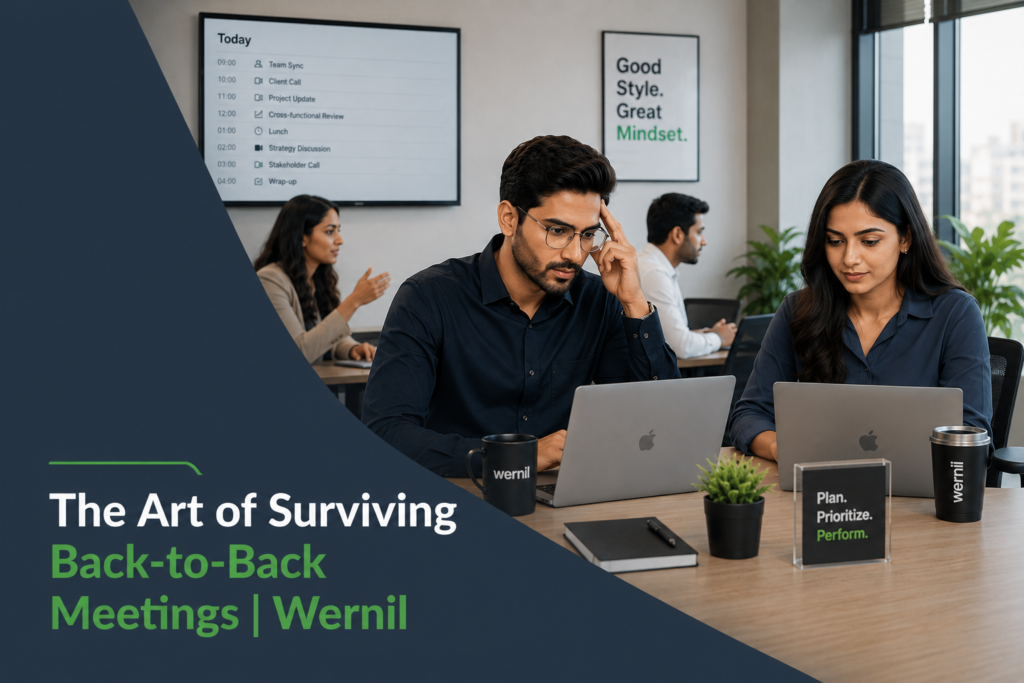
The Art of Surviving Back-to-Back Meetings
There was a time when meetings were occasional checkpoints.
Today, for many professionals, they fill almost every hour of the workday.
One video call ends, another begins. Team updates, client discussions, brainstorming sessions, project reviews, and status meetings quickly take over the calendar. By the end of the day, you may feel busy without feeling productive.
If that sounds familiar, you’re not alone.
Back-to-back meetings have become one of the biggest challenges of modern work life.
When Your Calendar Controls Your Day
A full calendar often creates the illusion of productivity.
While collaboration is important, spending every hour in meetings leaves very little time for focused work.
Professionals frequently find themselves answering emails during calls, finishing presentations late in the evening, or completing important tasks after working hours.
Finding balance between collaboration and deep work is beco
ming more important than ever.
Not Every Meeting Needs to Be a Meeting
Before scheduling a meeting, ask a simple question:
Could this have been shared through an email or a quick message?
Many workplace conversations require only a short update rather than a 30-minute discussion.
Respecting everyone’s time creates a healthier and more productive work culture.
Prepare Before You Join
Five minutes of preparation can save thirty minutes during the meeting.
Review the agenda.
Know the purpose.
Prepare your questions.
When everyone arrives prepared, discussions become shorter, clearer, and more productive.
Protect Time for Deep Work
Meetings are important.
Focused work is equally important.
Whenever possible, block dedicated time on your calendar for tasks that require concentration.
Without uninterrupted work sessions, projects often take much longer to complete.
Take Short Breaks Between Meetings
Moving directly from one meeting to another can quickly become mentally exhausting.
Even a five-minute break helps.
Stand up.
Stretch.
Grab a glass of water.
Step away from the screen for a moment.
These small pauses improve energy and help you stay engaged throughout the day.
Speak Clearly, Listen Carefully
Great meetings aren’t about speaking the most.
They’re about contributing with purpose.
Listening carefully, asking meaningful questions, and summarizing key decisions often create more value than talking continuously.
Quality conversations always beat longer conversations.
End Every Meeting with Action
One of the biggest reasons meetings feel unproductive is a lack of clarity.
Before leaving, make sure everyone understands:
- What was decided
- Who owns each task
- The next deadline
- Any follow-up actions
Clear action items prevent unnecessary future meetings.
Meetings Are About People
Behind every meeting invitation is a team trying to solve problems together.
Good communication builds trust.
Respecting others’ time builds stronger relationships.
Small habits like arriving on time, staying focused, and avoiding distractions create a better experience for everyone.
Finding Balance in Corporate Chaos
Modern work isn’t slowing down.
Calendars will remain busy.
Projects will continue to evolve.
The goal isn’t to eliminate meetings.
The goal is to make them meaningful while protecting time for creativity, problem-solving, and focused work.
Corporate Chaos becomes much easier to manage when every meeting has a purpose.
Final Thoughts
Meetings are an essential part of today’s workplace, but they shouldn’t consume the entire workday.
By preparing ahead, protecting focus time, and making every meeting more intentional, professionals can reduce stress and increase productivity.
At Wernil, we celebrate every part of modern work life—including the meetings we love, the meetings we tolerate, and the coffee that gets us through them.
Because behind every packed calendar is someone doing their best to move great work forward.
Frequently Asked Questions
Why are back-to-back meetings exhausting?
They reduce focus time, increase mental fatigue, and leave little opportunity for uninterrupted work.
How can I stay productive during a meeting-heavy day?
Prepare in advance, take short breaks, block focus time, and avoid unnecessary meetings whenever possible.
How long should an effective meeting be?
Many workplace discussions can be completed in 15–30 minutes when there is a clear agenda and defined outcomes.
What is meeting fatigue?
Meeting fatigue is mental exhaustion caused by attending too many meetings without enough time to recover or complete focused work.
Why does Wernil write about workplace culture?
Wernil creates apparel inspired by modern professionals and the everyday experiences that shape office life, making workplace culture a natural extension of the brand.
Call to Action
Make Every Workday Count
Whether you’re navigating packed calendars, tight deadlines, or endless meetings, Wernil’s Corporate Chaos collection is inspired by the realities of modern work life.
 Explore the Corporate Chaos Collection